
Turn a Big Personal Goal into a Small Experiment
Make room for something that matters to you with a clear action, an honest review, and permission to adjust.

Name what matters before choosing the task
A personal goal can become a collection of things you think you should do. Before making a plan, ask what the goal means to you. Do you want more room for creativity, a clearer boundary, a new skill, or time for something you have neglected? Write the reason in your own words.
You do not need a dramatic statement about becoming a different person. An ordinary preference is enough. “I want to spend a little time drawing again” gives you a direction. Keep the reason close to the plan so you can return to it when you are deciding whether a particular action still belongs.
Separate the direction from the next action
A direction such as “be more creative” can guide choices, but it is too broad to put directly into a calendar. Choose one action you could complete with the time, resources, and access you currently have. That might be a short sketch, a conversation about a class, or gathering a few materials you already own.
Describe the action so you can tell whether it happened. Avoid making the first step depend on a complete change of routine. If you need information or someone else’s agreement before proceeding, make that the next action rather than scheduling work that is not yet possible.
Treat the plan as an experiment
An experiment has a question, a small action, and a review. You might ask, “Would a short creative session after lunch fit my day?” The aim is to learn something about the fit, not prove that you can maintain an ambitious schedule indefinitely.
Choose a modest trial period or a small number of attempts. Decide what you will observe: whether you could begin, whether the setup was practical, or whether the action still felt worthwhile afterward. These are questions you can answer from your experience without promising a particular emotional result or comparing yourself with someone else’s progress.
Make the first attempt easy to begin
Reduce the decisions that come before the action. Place the notebook where you use it, choose a simple prompt, or decide which materials you will try. A clear beginning can be more useful than a detailed plan for every future stage.
Also decide where you will stop. A short session with an agreed ending can be easier to fit around existing responsibilities. If you find yourself repeatedly improving the setup without trying the activity, make the next attempt deliberately simple. You can learn from an imperfect first version more easily than from a plan that never leaves the planning stage.
An illustrative creative experiment
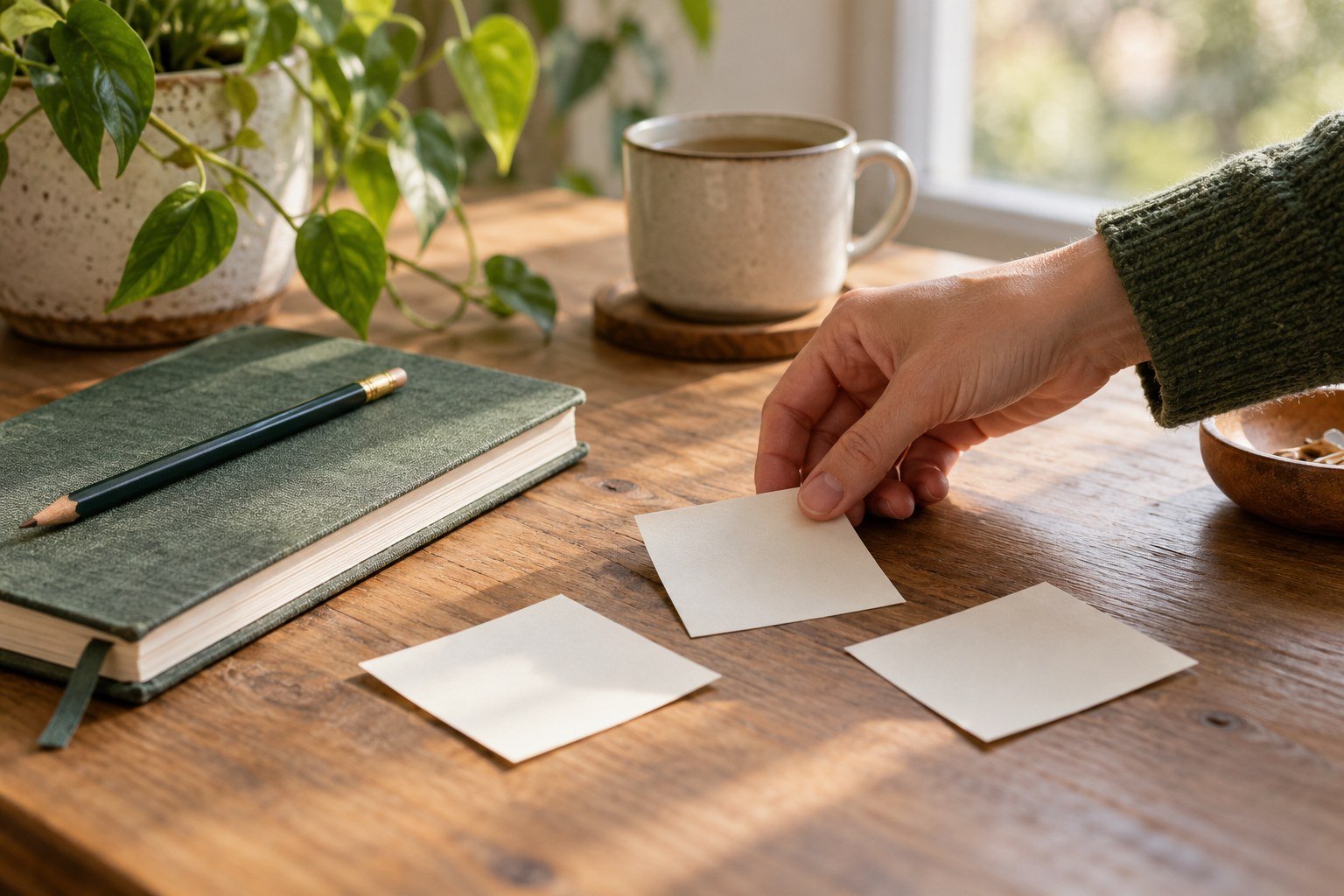
Imagine someone wants to return to drawing but has little uninterrupted time. They choose three short sessions over a week using a pencil and paper already at home. Each session begins with one everyday object on the table. The task is to make a rough sketch, not a finished piece for public display.
After each attempt, they note the time available, what helped them begin, and what made the setup awkward. At the review, they discover that mornings are rushed but an early evening window is workable. This is a fictional planning example. Its value is the method of noticing and adjusting, not a claimed transformation.
Notice obstacles without turning them into identity
An unfinished attempt can tell you that the action was too large, the timing was poor, or the instructions were unclear. It does not automatically tell you something permanent about your character. Describe the obstacle as specifically as you can before deciding what it means.
If the same obstacle appears repeatedly, change one part of the experiment. Reduce the size, choose a different cue, ask for help, or reconsider whether the activity matters to you right now. You can decide to stop an experiment. Choosing what no longer fits can be a thoughtful decision rather than something you need to hide from the record.
Keep reflection grounded in what happened
Use a few short prompts: What did I try? What did I notice? What would I repeat or change? Separate observable details from assumptions. “I started after dinner twice” is an observation. “Everyone else would find this easy” is a comparison you may not have evidence for.
Keep the notes in a format you can maintain and share only what you want to share. A reflection workbook can help organise your thoughts, but it does not need to become a daily requirement. If reflection turns into repetitive self-criticism, simplify the exercise or choose a different way to review the practical question.
Choose the next experiment deliberately
At the end of the trial, return to the reason you wrote at the beginning. Does the activity still make room for something you value? Which parts were practical? Choose whether to repeat the same experiment, change one element, or try another small action.
Do not increase the commitment automatically just because one attempt went well. Consider the next week’s circumstances before adding more. A small experiment can remain small for as long as that is useful. The point is to make choices with better information about your own life, rather than build a routine around somebody else’s definition of progress.